Thursday, March 5, 2015

Invisible Threads

Zestful Blog Post #95

This morning, thanks to Google’s as-usual-incredibly-charming Doodle, I read about Momofuku Ando, the guy who invented instant ramen. A quote from him: “Each and every event in the past is connected to the present by invisible threads.” How Japanese, I thought; in so many Western cultures we’re so eager to get to the future that we barely acknowledge the present, let alone the past. And how appropriate to my subject today.

This week’s installment of Elizabeth’s Publishing History:

#14 Invisible Threads

Although I tell something about how I came to develop and write You've Got a Book in You in the book itself, the very first germination of it occurred in a single unhappy moment.

I had had four novels published (the Lillian Byrd books) and had written a different kind of novel and was shopping it around to literary agents, as I still didn't have representation. This was like 2005. I was getting turned down and was starting to get depressed. I called up my friend Phil, who, being a Hollywood actor, was by definition no stranger to rejection. When I whined out the story of my latest near-miss with an agent, he said gruffly, “Good. That means she was the wrong one for you.”

And I felt better (marginally) and I started thinking about all the various ways there are to cope with rejection, and I started to think I could write something that other authors could benefit from. So for the hell of it, I shot off an email query to Writer’s Digest magazine.
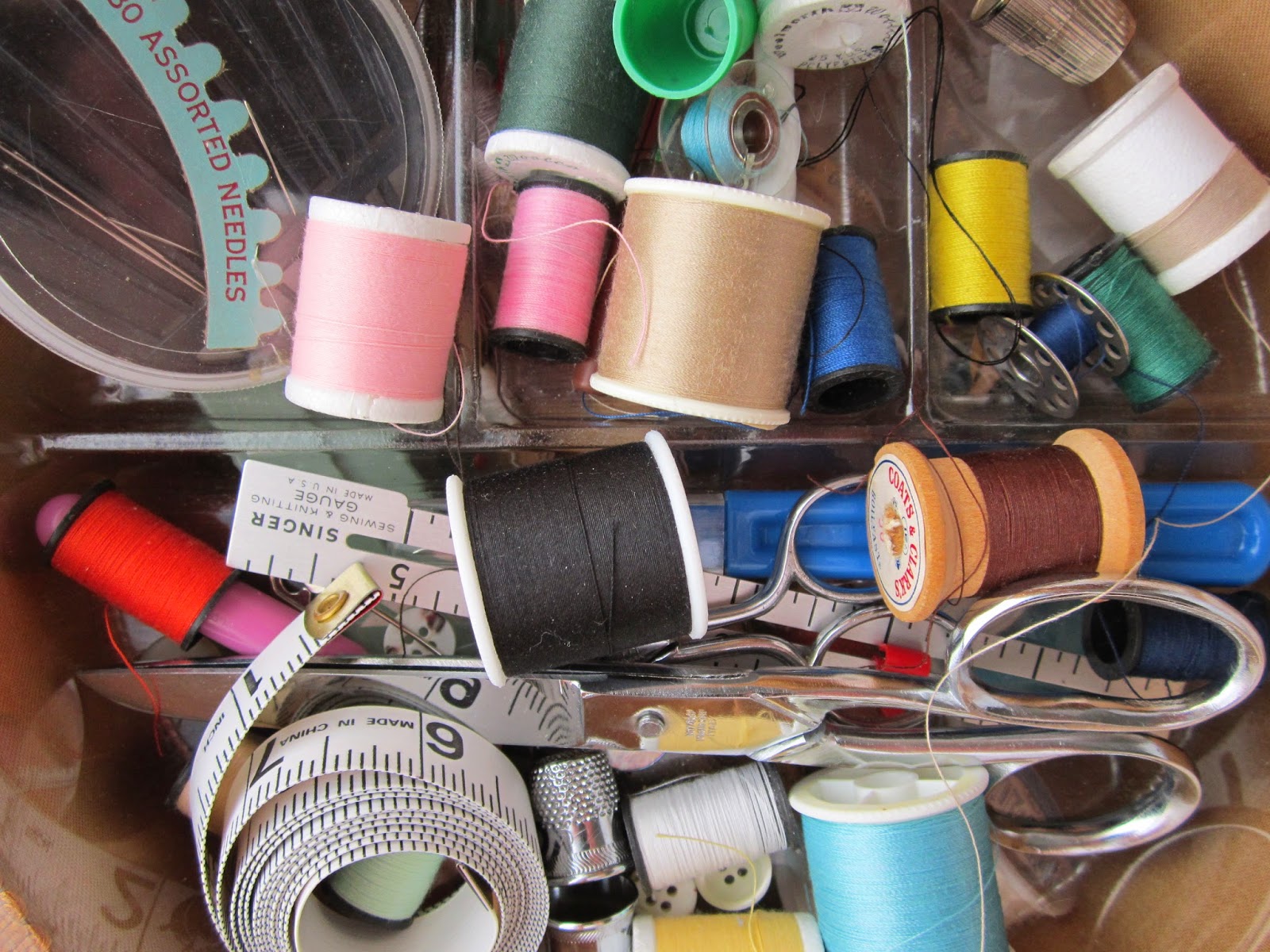

[I could not find a public-domain photo of invisible threads, so here’s one of normal ones.
Photo by ES.]

They wrote back rejecting the coping-with-rejection idea but asking me to write an article on one of the little ideas I’d thrown in at the bottom of the email, the one about how to jump-start your writing when you’re stuck.

Thus began my career writing for WD. Instantly, I became an expert on writing.

When, as time went on, friends and strangers would ask me for help with writing or getting published, I found that no book out there told the message that I was telling aspiring writers in my articles and over cups of coffee in conference-hotel concourses, which is that writing is an easy pleasure. All you have to do is get out of your own way and let your natural talent and creativity take over. I realized I needed to write my own book, based on things I’d worked out for myself.

I talked it over with Cameron, who agreed I had something unique to offer. She urged me to write up a proposal that she could shop to publishers. I had little doubt that she could find a publisher for it, but at this point (this was like 2011) would that be the best course of action? I'd been busy putting out my novels on Kindle, and already I felt addicted to Amazon throwing money into my checking account every month. Not that it was a lot, but it was nice.

Some other WD contributors were self-pubbing their craft-of-writing material as well as trad-pubbing it, most of them with Writer’s Digest Books. So I talked with a couple of them, and they pretty much said, “If you go the trad route first, you establish a good credential. Then you can self-pub more stuff and keep all the money.”

Also, I talked to Cameron’s boss, Don Maass, the supreme guru of agentdom who was also a WD Books author. Of course he had a vested interest in me going the trad route, or putting out “a real book,” as he called it. But he made lots of objective sense, pointing out the wider distribution a trad publisher can offer, as well as the numerous other opportunities that can more easily come your way if you’re with a publisher of note—things like speaking invitations, private consulting, etc.

So I went the trad route with You've Got a Book in You. Writer’s Digest Books, we knew, would be a logical home for it, but Cameron presented it to a number of other publishers as a matter of course. In the end, we went with WD Books. Although a separate entity from the magazine (under the parent company F+W Media), they knew me, and were immediately excited about the book.

I will say that the publishing process was a bit rocky, with the acquiring editor leaving the company halfway through the project, and a new editor taking over, but these things happen, and you have to deal.

Next week: Why I went indie with Left Field, and what’s coming up next. I might note that if you’d like to comment (and I wish you would), some people have been having problems doing so via the Chrome browser. Internet Explorer seems to work better. (Can Google address that? I don’t know.)
Anyway, to post, click below where it says, 'No Comments,' or '2 Comments,' or whatever.

If you'd like to receive this blog automatically as an email, look to the right, above my bio, and subscribe there. Thanks for looking in.

Thursday, February 26, 2015

Home Front Madness

Zestful Blog Post #94

I’m writing this with pen and paper at my kitchen table and wanted to refresh my memory as to where I’d left off last week. Looking at my blog on my phone, it seems so—gosh, professional. Soon I’ll type this entry into my laptop and it’ll be my standard draft-and-a-half, and good enough for jazz, as they say in the music biz.

Recently I gave an interview to a journalist who is writing an article about how writing by hand is beneficial. She had read You've Got a Book in You (and nicely highlighted it in an article last year) and remembered that I’d put in some stuff about writing longhand. It was a fun interview, and during it I learned that writing longhand appears to be beneficial on the biochemical level, not just the spiritual one, as I had believed. Will let you know when that article comes out.

Winnie-way, as my old clarinet teacher used to say, during 2010-2013, I had a lot going on personally and professionally.

I’ll call this installment of EPH (Elizabeth’s Publishing History):

#13 Home Front Madness

Within the space of three years, Marcia and I experienced the partial destruction of our home on Washington’s Olympic Peninsula in a force-9 storm, a cross-country move and attendant farewells to many dear friends, the decline and deaths of both of our mothers, the dispersal of their households, the purchase and extensive renovation of a home, another, local move, tropical storm damage to that home requiring large-scale repairs, as well as the death of another family member whose estate I was charged with distributing.


[It took a fair amount of chainsawing and hauling before we could pull the cars out of the garage. Note wood smoke coming from stovepipe; since the power and phone wires were lying beneath that hemlock, the woodstove provided our heat and a cooking surface. Guess who slept on the couch next to the stove every night to keep it fed. This was actually 2009, Thanksgiving weekend.]

Oh, plus the near death and lengthy hospitalization of yet another family member, a heart scare for Marcia, and the beginning of a physical issue for me that would culminate in surgery in 2014. If we’d had a dog, I’m sure it would have gotten run over. But it wouldn't have died before we’d spent $5,000 at the vet and taken turns doing night shifts to administer round-the-clock medicine and supplements for three weeks.

Meanwhile, we both did what we could to maintain our careers. While acting as primary caregiver for my mom, I wrote articles for Writer's Digest, taught online webinars for their organization, did reporting and photography stringer work for the local paper, auditioned for and got a place in a local symphony orchestra, worked as a private manuscript consultant, got my rights back to my novels, reissued them in e-book (Kindle) form, spoke and taught at writing affairs on both coasts, and began work on Lillian Byrd #5 (Left Field).

Also during that period I wrote a proposal for You've Got a Book in You, got under contract for it, wrote it, saw it published, and did promo for it.

Looking back on all that, even in its most skeletal form, I can’t be surprised that I felt depressed and overwhelmed at times. I used to joke about shooting myself in the head if one more goddam thing went wrong. But I was careful to leave the firearms unloaded, which would have forced me to take the extra step of selecting and loading ammo, which hopefully would have given me time to reconsider.

I feel that only recently has my life become more or less stable. We have the freedom of working all day, every day, without having to factor in 3 a.m. distress calls from panicked old ladies.

Marcia is thrilled to be immersed in coding full time, and I can’t wait to show off her new work when it's ready to ship. Apart from writing, I do my shoulder exercises, swim at the Y, and play a little golf. Florida is beautiful in the winter. Hurricane season is just around the corner.

Next week I swear I’ll tell the story of how You've Got a Book in You came about, and why I chose to go the traditional publishing route with it. After that, why I chose to go indie with Left Field.

But for now, Jesus, I’m exhausted.

What do you think? To post, click below where it says, 'No Comments,' or '2 Comments,' or whatever.

If you'd like to receive this blog automatically as an email, look to the right, above my bio, and subscribe there. Thanks for looking in.

Thursday, February 19, 2015

Good News, Bad News

Zestful Blog Post #93

Good News, Bad News

A bit of pre-new-post business:

Frequent Zestful blog commenter Lidy Wilks is also a blogger in her own right. (And a highly accomplished one, too!) She sent along this Very Inspiring Blogger Award, which has become somewhat of a phenomenon on the Web. Lidy received the award from another blogger, who received it from another blogger, and so on back to 2009, when Cathe Holden came up with the idea for bloggers to honor other bloggers. And now Lidy has very generously honored me with it.
When you receive this award,


the protocol is to:

1) Thank the person who nominated you and include a link to their blog. Thank you, Lidy! (Lidy Wilks)

2) Send the award to other bloggers you admire, and put their links on your blog. Apart from Lidy, I follow Seth Godin and Jane Friedman, both of whom have received this award numerous times. It is slowly penetrating my brain that the current custom is for bloggers to list the blogs of others on the sidebar of their blog site, thus helping propagate worthy blogs, blogs, and more blogs. Perhaps I will do this someday.

3) The third requirement varies, depending on whose blog you’re looking at. Some bloggers tell about what inspires them to write, other tell seven random facts about themselves, some list their fifteen most disgusting sexual fantasies, etc. I will say that I was inspired to write novels by reading bad novels and knowing I could do better. A random fact about me is that I like to ask guys to tell me about fistfights they’ve been in. One more random fact: I would like to ride a horse or motorcycle across the Mongolian steppes someday. A particularly disgusting sexual fantasy of mine involves pygmy goats and Diet Pepsi.

On to today’s post!

We'll call this one:

#12 Good News, Bad News

So last week, I wrote about my self-funded book tour for The Extra, which resulted in some nice things, but not enough sales in subsequent months for Macmillan to commit to publishing mass-market paperbacks.

As of this point I had turned in the third in the series, On Location, and could look forward to a hardcover release of that. But then…

I phoned Cameron and said, “What do we do now?”

“What’s your idea for a fourth book in the series?” she asked.

I related the basic outline I’d developed so far, titled Best Boy.

She said a mild curse word.

“What’s the matter?”

“Well, I was hoping it wouldn’t be a very good idea, and I’d just tell you to forget it and write something totally different—start a new series. But that’s a great story for Rita.” We discussed how hard it is to jump a series from one publisher to another, unless your sales are already stratospheric. But Cameron said, “If you’ll write a detailed outline and the first three chapters, I’d like to take a shot at selling it.”

“It has to be one of the big six.”

“Yeah. It’s an outside chance, but I really want to try.”

So I took a few months and wrote up the material. When Cameron and I decided it was wonderful, she set to work. This was by now somewhere in 2010.

Cameron works fast. She phoned within days. “I’ve got good news and bad news.”

At a moment like this, one simply waits.

“The bad news is none of the other big six wants to take on the series. But the good news is, four of them said, ‘We’d love to see something new from Elizabeth.’”

The second half of a phone call like that is supposed to make your day. And it pretty much did for me. But while I was putting out the first three books in the Rita Farmer series, the digital publishing revolution was thundering along. People like Joe Konrath were making a killing self-publishing on Amazon and writing about it and turning down six-figure deals from their old publishers, and author friends of mine who had self-published were urging me to get my rights back and reissue my books myself, and self-publish any new ones.

So I set about doing that, keeping the idea of something new for New York in abeyance.

Meanwhile, after the first four Lillian Byrd books were published, around 2005, I’d begun writing for Writer’s Digest magazine, doing features on how to write well, and teaching live webinars.

Also, meanwhile, the thing started to happen to me that happens to all legit authors, which is whenever somebody asks you what you do and you say, “I’m an author,” they say, “Oh, I want to write too!” or “I’ve written a book, but I haven’t been able to get it published. Will you help me?” Doubly so when they find out I write for Writer’s Digest.

My articles in the magazine were supposed to address that, but I got tired of telling people, “Get a copy of Writer’s Market, like I did. Read it and get busy.”

I started to get an idea for a new book, this one nonfiction. As you can see, I had a lot of balls in the air. More next week.

What do you think? To post a comment or question, click below where it says, 'No Comments,' or '2 Comments,' or whatever.

If you'd like to receive this blog automatically as an email, look to the right, above my bio, and subscribe there. Thanks for looking in.

Thursday, February 12, 2015

Touring Against the Odds

Zestful Blog Post #92

Last night I had a blast on Andy and Rev’s Cocktail Hour, my first truly live, unscripted online appearance. I've been on radio and television a number of times, doing panels and interviews, and have done speeches and workshops that were recorded. My webinars for Writer’s Digest were all streamed live, but those were scripted down to the minute. So this was actually a first. And now it’s on YouTube. With an opening screenshot that makes me look like I just crawled across the Sahara with the flu. I'm putting the link in even though I've only watched a few minutes of the recording, so throw me a gold star for bravery, please. The Link:

Andy and Rev are fabulous, book-loving humans, so if you like this recording or the others they’ve put up, consider letting them know by a comment or a share. Their web site: www.cocktailhour.us. They've got tons of other author chats and reviews, especially for the LGBT audience.

One more item of business: We’re doing a Kindle Countdown deal on Left Field right now. You can get it for 99 cents through most of Friday (yes, lucky 13), then it’ll go up by a buck a day until hitting its current regular price of $4.99. If you've already acquired it at full price, thank you. I believe you can actually do a return, then re-buy it, if your budget is tight. No authors ever say that publicly, but I believe it’s true.

I might add that as I write this, the book has regained the #1 spot on Amazon’s LGBT Mystery/Detective list, and three of the other four books in the series are in the top hundred on that list. So, hey, promos do help!

OK, back to my series on my publishing history (which actually you’re seeing unfold before your eyes; someday I’ll catch up, I promise). We’ll call this one:

#11: Touring Against the Odds

OK, in 2009 The Actress paperback is canceled, and The Extra is out in hardcover and e-book. My publicist at St. Martin’s Minotaur agreed to book a bunch of appearances at bookstores for me for a two-week summer tour. As I mentioned last week, this was all on my dime except for some co-op promo with the stores, signage, and goodwill from Minotaur.

My partner Marcia and I traveled by car from our then home in Washington state down to Los Angeles and back, doing drop-ins at more than thirty bookstores and doing about a dozen scheduled events, some with other authors. I promoted the appearances as best I could and let Providence take care of the rest, as Huck Finn would say.

What’s a drop-in, you might ask? That’s when you stop by a store, meet the staff and sign any stock on hand, give out bookmarks, and maybe meet a few customers as well. It’s best if you phone ahead to try to time your visit for when the appropriate buyer is on duty; I would ask, “Please tell me the name of your mystery buyer, I’d like to bring in a copy for him/her. Will he/she be working tomorrow afternoon?” But I’ve also just dropped in cold with pretty good results.

For chain stores, a cold drop-in is easiest. You just ask for the top mystery-lover on staff at the moment, give that person your free book and chat them up, sign stock and leave bookmarks, and be on your way.


[I love to surrender to the yellow lines...]

We traveled as cheaply as possible; Marcia worked Priceline to great advantage. Our biggest coup was a night at Dolce Hayes Mansion, this incredibly luxurious boutique hotel in San Jose that was going for close to $300 a night. When I told the desk clerk we’d gotten our room for $70, she didn’t believe me.

The trip yielded many good things. Apart from gaining exposure for my books, I made some lasting friends among booksellers, authors, and readers, and I learned countless little things to make drop-ins and appearances go smoothly and memorably.

However, independent bookstores were closing left and right, the chains were starting to have major difficulties, and online book sales were surging, thanks to Amazon. So the relevance of book tours was starting to wane, and has continued to wane ever since.

Although The Extra got a bump from my efforts (and The Actress, too, for that matter, in stores that carried lots of hardcovers), I learned, months later, that sales just didn't justify a paperback for that title either. I had already turned in the third in the series, On Location.

My agent, Cameron, and I had a parley. The results of that next week.

What do you think? To post, click below where it says, 'No Comments,' or '2 Comments,' or whatever.
If you'd like to receive this blog automatically as an email, look to the right, above my bio, and subscribe there. Thanks for looking in.

Thursday, February 5, 2015

Dude, You're Screwed

Zestful Blog Post #91

Before I get into today's real blog, I want to let you know about a live online appearance: Next Wednesday, Feb. 11 at 8 p.m. (EST) I’ll be doing a Google Hangout with Andy and Rev on their Cocktail Hour. If you add them to your Google+ circle you can watch and listen live. (Handy link here: https://plus.google.com/+CocktailhourUs1/posts)

How it works is the url is available as soon as the thing goes live, so if Cocktail Hour is already in your circle, you can just go there at 8 next Wednesday evening and take it in. I'm sure I'll be brilliant. And aided, no doubt, by a Tanqueray martini, very dry, up, olives.

I'll be talking a bit about Left Field, but if you have any questions/issues you’d like me to discuss about anything, let me know either by commenting on this blog or sending me an email. (esims at elizabeth sims dot com, no spaces and use the punctuation marks you would normally; this is to defeat web spiders that search for email addys in blogs and then sell them to online porn stores, Nigerian royalty, etc.)

Now for the next installment in EPH (Elizabeth’s Publishing History):

10) Dude, You’re Screwed

Last week I wrote about the vagaries of the marketplace and cover design re: my debut mainstream novel, The Actress. I failed to mention that, just before the hardcover came out, I was informed by the Macmillan/St. Martin’s Minotaur marketing team that henceforth, Twitter would be the way we would all build community and do reader outreach. I found this dismaying, as I had detested Twitter as soon as it started to emerge, and had vowed never to establish a Twitter account. The insubstantialness of it, the quick shallowness of it, repelled me to the core. I had had my own web site for years, and had acquiesced to Facebook. (And I stuck with FB, even though they totally betrayed me; I had signed up early and written entertaining entries in the ‘background’ section of my profile, only to have FB delete all that when they changed their business model. Bastards. Bastards.)

But I dutifully established a Twitter account and made an effort to promote myself and my work without seeming to promote myself and my work. What a ton of fun. To this day social media is still a struggle for me, mostly because I’m like, Who in God’s name wants to hear my opinion on anything? The world is already full of blowhards. I’m supposed to be another one, only more entertaining?

However, I’m currently feeling a bit more dispassionate about it, like, OK, it’s business, try to find a sincere way to do this. I’m working on it and will write more about this subject in the near future.

Before returning to my narrative, I might add that when it came to promo for The Actress, I did all the normal stuff: announced the book on my web site, sent out newschats to my email list, printed up bookmarks to give out wherever I went, set up a signing at the Mystery Writers of America booth at Book Expo (and was invited to MWA’s late-night cocktail party at The Edison in Los Angeles, a great place to feel cool), went to and spoke and taught at other conferences and workshops, etc. But the Great Recession was a tough opponent.

As far as I knew, the paperback of The Actress was in production; it had been put up on Amazon for pre-order with the new cover I showed you last week. The release date was March 31, 2009. Two weeks before that date Cameron called. “I have bad news,” she said. “Minotaur pulled the plug on the paperback of The Actress.”

Since this was business and not a death in the family, I didn’t get emotional. But I knew exactly what had just happened. “So that’s it, then,” I said. “I mean, that’s the end of my career with Minotaur.” As a former bookseller, I knew how important it was for an author to be in paperback. The hardcover is your calling card, but the vast majority of your sales come from your paperbacks. Remember, at that time e-books were an unknown quantity in New York publishing.

Cameron said my editor told her that she’d fought and fought for the paperback at whatever meeting, but ultimately there weren’t enough advance orders from booksellers to justify an initial print run.

After I’d digested that news for a few days, I phoned my editor. I asked if there was any chance they’d reverse their decision if sales of the soon-to-be-released second in the series, The Extra, were above expected.

“Well, no,” she said. “There’s just not going to be a paperback of The Actress. We might run one next year for The Extra if the hardcover does well.”


[Here again we have a blonde facing away from us, but this one's definitely better than the original cover for The Actress.]


“OK,” I said. The gauntlet had been thrown down. I asked if Minotaur would help me set up a book tour for The Extra. I knew they wouldn’t pay my expenses, but I wanted their publicists to get my foot in the door at bookstores, and hopefully provide some co-op marketing and signage. The answer was yes.

More next week.

What do you think? To post, click below where it says, 'No Comments,' or '2 Comments,' or whatever.

If you'd like to receive this blog automatically as an email, look to the right, above my bio, and subscribe there. Thanks for looking in.

Thursday, January 29, 2015

Subprime

Zestful Blog Post #90

Hi there! I hope you survived this week’s storm of the century. Here’s the next installment in EPH (Elizabeth’s Publishing History). Let’s call this one:

9) Subprime

The Actress was released in the summer of 2008. Does this time period resonate in your memory? You betcha: the mortgage meltdown, the government bailouts of banks and General Motors. (As a native Detroiter, I shake my head at that: in the days of tail fins and pushbutton radios, GM could have bailed out the government.) The dark dawn of the Great Recession.

Just about everybody’s net worth went down a little or a lot, and the most significant result was that people did not rush out to buy The Actress.

I might add that they didn’t rush out to buy debut hardcovers by just about anybody else, either.

The efforts of the Macmillan marketing machine were mighty (felt I ought to stick with the alliteration as long as possible there), and the book did sell some in stores and online, as well as, notably, to thousands of libraries across the country. God bless all librarians everywhere. It still does my heart good to hear from a reader who found my books in their local library (even recently in Canada, which surprised me, given that country’s restrictive content laws governing book sales (another subject)).

Side note: It’s true that a library copy represents just one sale, and usually at a reduced royalty rate because publishers sell to libraries at special discounts. Some authors actively scorn library sales. I remember watching a filmed interview of James Ellroy during which he recounted a fan approaching him somewhere and gushing that she got L.A. Confidential out of the library and LOVED it. He said that he replied, “Well, that doesn’t do me a goddamned bit of good, does it?” But the point is, that library copy gained him a fan, and library fans will often buy the paperback, or even the next hardcover because they don’t want to risk a waiting list. James was perhaps not brought up to receive compliments gracefully.

When the financial crisis got going, even before my book was published, I immediately thought, ‘This bodes ill for The Actress,’ and I was right.


[Original cover.]

My deal with Macmillan was for two books. As soon as I signed the contract in 2007, I got right going writing the second in the series, The Extra. So when The Actress came out in 2008, I had already turned in The Extra and they were happy with it, and they offered me a contract for the third in the series.

The plan was to release the mass-market paperback (that is, the small-format, pocket edition) of The Actress simultaneously with the hardcover of The Extra in 2009, about a year after The Actress’s debut. That is a common practice.

The economic storm was rolling, but nobody knew how bad it was going to be, nor how long the pain would last, so most publishers were doing business as usual. I might add that Amazon was getting rolling on this thing called, sinisterly, “Kindle”. The Actress and the other books in that season’s Macmillan catalogue were the first books published by that company in e-book format.

When Macmillan saw that sales for The Actress were less than hoped, in spite of an almost uniformly enthusiastic critical reception, one of their responses was to redesign the cover for the paperback. This was a great move, because the original cover had issues.

So, backing up to pre-hardcover release: I had expected the cover for The Actress to be kicky and bright, to suggest the biting humor and almost over-the-top plot, along the lines of chick lit. I know there’s a mystery and some graphic gore (what with my killing off a main character, see Zestful Blog post #87), but I felt the book was wacky and light too. I didn’t get such a cover, but when I first saw it I was thrilled, because compared with the original covers of the Lillian Byrd series, which were predominantly black and pretty consistently horrible, it was good. It was professional.

The cover told the story, we all thought: it showed, from the back, a blonde-haired woman (Rita, my protagonist) dressed in a business suit, facing a courtroom. The thing that only struck me after I’d lived with the book staring me in the face in my office for a few months was that it was not a welcoming cover image. Someone standing with her back to you does not draw you in; when you walk into a party, do you immediately approach someone with their back to you? Customers in bookstores are like party guests.

So, a redesign was done. No, my opinion was not solicited; I didn’t even know they were doing it until they sent a proof image to Cameron, who forwarded it to me.


The redesigned cover still lives as a ghost on Amazon:

What happened to the mass-market paperback of The Actress? Tune in next week.

Post a comment! Click below where it says, 'No Comments,' or '2 Comments,' or whatever.

If you'd like to receive this blog automatically as an email, look to the right, above my bio, and subscribe there. Thanks for looking in.

Thursday, January 22, 2015

Throw the Baby in the Maw

Zestful Blog Post #89

Continuing on my journey through the publishing world, we have this week’s installment:

8) Throw the Baby in the Maw

The baby, is, of course, one’s manuscript, and the maw is your publisher’s machinery. Once the contract is signed, the maw opens.

The main thing to realize about traditional publishing (or whatever you want to call it; some call it ‘legacy’ publishing, which is a beautifully underhanded slap) is that the process takes a long time, even with the ever-evolving digital technologies. Typically it’s a year from acceptance to books-on-shelves, though publishers keep trying to shave this down, with spotty success.

What has to happen before blastoff?


[From my recent trip to Cape Canaveral.]

A long list of stuff:

Contract negotiations. These can take a day or weeks.

Revisions. You might wait three months for your editor, once the contract’s in place, to send you his or her notes on suggested revisions. This go-round is often called a ‘line edit,’ because the editor goes over your manuscript line by line, making comments and suggestions. They always want the thing back from you within a tight time window, like two weeks.

I’ve been lucky that the editorial process on all my books has been light. You can pretty much count on this: these days, if a book isn’t in pretty great shape, editors simply pass on it, with rare exceptions.

I remember reading, before I got published, an account of Pat Conroy working with his editor, Nan Talese, on revisions. Reportedly they holed up in a hotel together and went over his manuscript(s) for days and days on end, with Talese massaging the material, helping with every aspect of rewrites, etc. And I marveled, thinking hell, does she hold his dick for him while he pees? Talk about coddling. But when you’ve got a zillion-selling author, I guess you do what you feel you need to. (I tried to find the source of that report for this post, but could not. It was back in the 90s as I recall.)

Copy edits. This is where a copy editor, who specializes on the molecular level of grammar, punctuation, spelling, and formatting, goes over everything. Some of them also do fact-checking; for instance, a copy editor once looked up a particular firearm I mentioned, and told me it had been out of production for a few years. That was OK, since the gun didn’t have to be brand-new.

I worked once in a situation where I was given (with no notice) a weekend to go over copy edits for an entire book. The time pressure is because of their publishing schedule. For one example of a link in the chain, the publisher’s printer schedules jobs as tightly as possible. This is efficient. But if your book misses its slot, it might have to go to the rear of the queue, so to speak, so as not to throw off jobs all down the line. If you miss your print date, you’ll miss your release date. So editors are hyper about their publishing timelines, and when the crunch comes, it’s usually on you.

Final proofreading of the galleys. This is done by you. The galley is your book as it has been designed and typeset. That is, you’re looking at the exact product that will go through the printing press and be bound. Last chance to catch errors.

I might add that sometimes copy editors will inadvertently add errors to your manuscript, as when they’re inputting all the agreed-upon changes. A period or a quote mark might go missing, so when proofing you have to really focus.

More on the publisher’s side:

Release date has to be decided on, taking into account other books they’ll be releasing at the same time.

Marketing plan. Needs to be developed and groundwork laid for it.

Cover design. You’ll probably have no say in this.

Catalogue. Usually twice a year, publishers develop and release ‘catalogues’ of their upcoming titles to buyers at the bookstores and libraries, so these folks can browse and decide what to pre-order, and how much.

Galleys need to be sent to reviewers; increasingly this is being done electronically.

Printing and shipping. Of course e-book release is in here somewhere.

On top of all this, you have to factor in weekends and holidays, everybody’s vacation time, maternity leave, knee surgery, etc. etc., as well as slippage due to other authors missing their deadlines during the edit process and throwing your editor and thus everybody else off. (I plan to write more about the actually fairly intriguing subject of deadlines in another post.)

OK, next week we’ll see what happened when The Actress hit the stores.

What do you think? To post, click below where it says, 'No Comments,' or '2 Comments,' or whatever.

If you'd like to receive this blog automatically as an email, look to the right, above my bio, and subscribe there. Thanks for looking in.