Showing posts with label Jessica Strawser. Show all posts

Wednesday, April 11, 2018

The Power of Thank You


Zestful Blog Post #259

Last week I got an email from a high school student in Los Angeles who asked if I would serve as his writing mentor for his senior essay project. As you might guess, I get asked to help writers a lot, from young people to elderscribes (yeah, I just made that word up!), and I have to say no to almost everybody. Because I hate saying no, I sometimes try to give the person a bit of help anyway. In this case, I did a little research and came up with two suggestions for the young man: a possible local mentor, and an article I found that I thought might be helpful to his project.

It’s funny, but when the student wrote back saying thank you, and that he understood, I felt this surge of warmth toward him. Many times, I don’t get a thank-you, and I predicted this young stranger would not bother. But I was happily wrong. I’ve given back-cover or inside-pages book blurbs to authors who never said thanks. Isn’t that amazing? It takes time to do those things. (When they ask the next time, guess what I’m gonna say?) One does not help people solely to be thanked, but it certainly does your heart good when it happens, and you remember it. I’ll always have warm feelings toward certain people I’ve helped who’ve gone out of their way to say thank you, or even send a little gift. (I have my eye on a 2018 Corvette, blue, hardtop, in case you’d really like to get on my good side. Seriously. Awesome car.)


[I kind of think this is a picture of gratitude. It's a prayer rug from the 19th century. Image courtesy of the Metropolitan Museum of Art, New York.]

The times I’ve neglected to say thank you (and realized it) still bother me, even though they were when I was young and didn’t really know better. Not long ago I thanked a newsletter editor for highlighting one of my books, and she wrote back thanking me for the thank-you, saying it was “rare to get a thank-you from an author.”

So I guess my humble bit of professional wisdom today is: A thank-you is not only polite, but it actually goes some distance in networking and plain old building of human capital. So, you know, win-win. Such a simple but powerful thing! We’re all much more eager to help someone who expressed gratitude for a prior favor.

I might add, thank you for reading, and thank you for being my friend!

Do you have a thank-you, or a didn’t-thank-you story to share? Tell us in a comment!

And hey, before signing off today, I want to give a call-out to three pals with new (or newer) fiction. They are all good people and good writers!

Neil Plakcy:  In His Kiss

In His Kiss by [Plakcy, Neil ]
  

Jessica Strawser:  Not That I Could Tell

Not That I Could Tell: A Novel by [Strawser, Jessica]


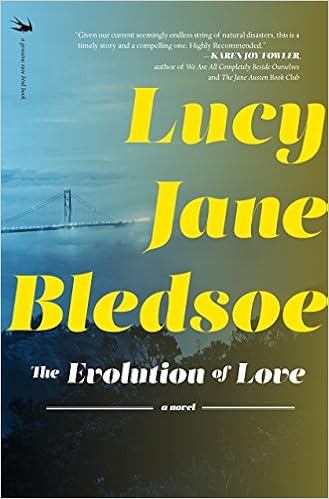
Lucy Jane Bledsoe: (preorder for release date next month)  The Evolution of Love


If I’ve missed noting a new or newer book by you here, lemme know, OK? You have my email addy.
To post a comment, click below where it says, 'No Comments,' or '2 Comments,' or whatever.
If you'd like to receive this blog automatically as an email, look to the right, above my bio, and subscribe there. Thanks for looking in.

Thursday, March 30, 2017

The Shifting Winds of Success

Zestful Blog Post #205

Jessica Strawser, Editor in Chief at Writer’s Digest magazine, is now a published author. Almost Missed You is available everywhere, reviews are glowing, and Jessica is officially a success! Congratulations, my friend.

In her recent essay in Publisher’s Weekly (which coincided exactly with the launch of her book, which I might note is some awesome promo/coordination), Jessica tells a little bit about the challenges and setbacks she dealt with before her publishing contract came. Given that I know a little more about her behind-the-scenes struggles, I particularly appreciate the Nancy Kerrigan-style “Why?” moment.


I could not but be struck by the difference between Jessica’s debut with St. Martin’s Press and mine (St. Martin’s Minotaur) back in 2008. My book, The Actress, was in the first group of releases to be issued as e-books (along with print) by SMP. Printed galleys were sent to the usual print sources, and they generated a handful of reviews. Authors were informed, just prior to their pub dates, that SMP was now going exclusively to Twitter for promo. No other information or instructions came forth, other than “Let’s all tweet!” I didn’t have a Twitter account. I got one, and stumblingly started to use it, in spite of being appalled at the quick shallowness of the medium. I still use it stumblingly. I’m still appalled by it.

I was invited to blog for a week on Minotaur’s “Moments in Crime” blog, which I dutifully and as entertainingly as possible did. The blog went defunct a short time later and was taken down. I repurposed some of those posts here in Zestful Writing.

Digital profiles and social media were just getting rolling back then, and I was slightly with it, having a web site, but that wasn’t saying a lot. Downloadable digital audio books—as opposed to books on cassette tape or CD—were starting to gain traction, thanks to the iPod. (Remember iPods?) But it didn’t occur to Minotaur to put The Actress on audio.

By contrast, Almost Missed You came out perfectly: simultaneous print, digital, and audio editions, with appropriate advance copies to critics AND consumers. Just three days after launch, the book has hundreds of positive reviews on Goodreads and dozens on Amazon, thanks in part to NetGalley. (Goodreads and NetGalley were barely getting going back in 2008, and New York publishers were oblivious.) Needless to say, the fact that so many of the reviews are positive has nothing to do with the medium, and everything to do with Jessica’s talent and command of her craft as a writer.

Jessica’s position at Writer’s Digest has been a great platform. She’s made good use of it; she’s worked. She’s written the next book, and she’s built a terrific presence on social media, and she’s done plain old networking as well.

As you can see, my purpose with this post is not only to give some exposure and props to Jessica and her book, but to illustrate the speed of change in the business. I’m happy and excited for my friend, and I’m envious too! But I’ve learned how fickle the world of publishing is, and how much one must rely on oneself as a source of strength, creativity, and resilience. The target is always moving. And we’re always learning. Opportunity awaits.

What do you think? To post, click below where it says, 'No Comments,' or '2 Comments,' or whatever.

If you'd like to receive this blog automatically as an email, look to the right, above my bio, and subscribe there. Thanks for looking in.

Thursday, January 19, 2017

Plot Pivots

Zestful Blog Post #194

I want to share with you some good stuff from my article, “21 Ways to Pivot Your Plot,” in the January 2017 issue of Writer’s Digest magazine. (Special thanks to top-dog editor Jessica Strawser for her work on this piece and so many others I’ve written.)

A pivot point is an essential fulcrum upon which a story or a large swath of story turns. Archimedes, standing there next to the Earth with his lever, would understand! More significant than an ordinary plot point (which might merely serve to impart information or develop character), a pivot point effectively changes the direction of a character or action sequence. Huge when used as a foundation for a story, a pivot point can also be a small powerhouse for plot movement.

If your outline or story hangs together but lacks zing or seems to be missing something, take a look and see if there’s an opportunity to create a pivot point, or three. Some may be more or less dropped in via a new character or subplot; others would require more planning to effectively incorporate. Let these ideas get you going. (Warning: plot spoilers ahead, in the name of learning by example. This is the life we’ve chosen …)


[Here's a pivot point we can all relate to.]

1. Drop a house.

The Wonderful Wizard of Oz by L. Frank Baum features any number of important turning points, the most central (and literal) of which is the tornado, which causes Dorothy’s transit to Munchkin Country. While the tornado is definitely the inciting incident, the most significant pivot point in the early going is the fact that Dorothy’s house crushes to death the Wicked Witch of the East. Which earns Dorothy the malignant enmity of the Wicked Witch of the West. Which instantly creates life-and-death urgency during every minute of Dorothy’s journey.

You too can create an accident that brings an innocent character into the crosshairs of an unforgiving antagonist, be it a car wreck or a spilled drink or a bump in an elevator.

2. Create a ghost.

Some plot points can pivot more than one way; an example might be the introduction of Boo Radley in Harper Lee’s To Kill a Mockingbird. The children’s obsession with him leads them to approach his creepy house; Boo’s secret gifts to the kids serve to reveal his true nature; and of course without Boo, Scout would not have lived to tell her tale. In this case the pivot point is the ultimate force for good.

Of course, Boo was a man, not a ghost. But you can take that idea and make it your own. The point is, a force that quietly crops up here and there can suffuse your plot with real tension and mystery.

3. Give somebody charge over something.

The classic fairy tale of Jack and the Beanstalk pivots beautifully on this. Jack’s mother, instead of taking their cow to market herself, entrusts young Jack to do the job. Before he even reaches town, he gets suckered into giving the cow to an old man who offers him a few supposedly magic beans for it. He catches hell, but all ends well.

The injunction, “Don’t screw it up!” is an automatic pivot point, because it applies relentless pressure to whoever’s entrusted with the task.

4. Suppress a conscience.

In Theodore Dreiser’s An American Tragedy, a key pivot point comes fairly late in the story, but it’s correctly placed for maximum impact. It’s not when the ambitious Clyde Griffiths gets the homely Roberta Alden pregnant, and not even when he begins to think of how much easier life would be without her. It’s when he swims away from her in the cold lake after their boat capsizes. He has made a crux decision that both solves his immediate problem and damns him forever.

In your work, think how you could give a more or less moral character a dire, fast decision to make—and have that character pick the dark path. Hugely compelling.

Check out the magazine for rest of the 21 pivots, and stay tuned to Zestful Writing for more fun!

What do you think? To post, click below where it says, 'No Comments,' or '2 Comments,' or whatever.

If you'd like to receive this blog automatically as an email, look to the right, above my bio, and subscribe there. Thanks for looking in.

Thursday, December 1, 2016

Thine Own Self

Zestful Blog Post #187

Before today’s post, I want to give a shout-out to one of our own, Stanley Walek. Big Stan is a friend, client, Zestful Blog reader and comment poster, and as of recently, he’s an author. If time travel, archaeology, ancient British history, ventriloquism, science, and off-kilter humor hold any interest for you, check out Paxton's Worlds. Congratulations, Stan!

The latest Writer’s Digest magazine (January 2017) is out, featuring a piece by yours truly, “21 Ways to Pivot Your Plot.” Here’s Editor-in-Chief Jessica Strawser’s blog about the issue. The theme is “Write That Novel!”, most appropriate for the New Year, I say. Lots of good stuff in there.

Was honored to have some of my work mentioned in a roundup of ‘best’ story writing advice by Jane Friedman recently. She’s put together quite a bouquet of sound material in that list, if I say so myself, so consider looking in on it.

OK. Today’s post is a pushback against Shakespeare abuse. The other day I heard somebody say ‘To thine own self be true,’ to justify some little selfishness or other, and it made me mad, because that’s the opposite of what Shakespeare really said. The quotation is incomplete.

I remember my mother discussing this once, when I was about nine. She was attending college to become an English teacher, so naturally she was studying Shakespeare. One day she was sitting with a cup of coffee at the kitchen table, musing, maybe more to herself than anything, about people screwing up this quotation. Then she must have noticed me standing there, and recited the full passage:


[from the cover of my old Kittredge edition]

“This above all—to thine own self be true,
And it must follow as the night to day,
Thou canst not then be false to any man.”

The play is Hamlet, the speaker is the ill-fated Polonius, and he’s finishing up giving a bunch of life wisdom to his son Laertes.

Buddha would approve. Good advice for children of all ages! I remembered that moment with Mom all these years.

Do you have a Shakespeare defense story to share? What do you think? To post, click below where it says, 'No Comments,' or '2 Comments,' or whatever.

If you'd like to receive this blog automatically as an email, look to the right, above my bio, and subscribe there. Thanks for looking in.

Thursday, October 15, 2015

Getting Paid to Play

Zestful Blog Post #128

Symphony season has started up again, with all its challenges and profound joys. I play the timpani in the South Shore Symphony Orchestra, a young, semiprofessional ensemble that will give concerts this season in Sun City Center and Carrollwood, Florida. (Local friends: first concert is a 2 p.m. matinee this Sunday, Oct. 18 at the UCC in Sun City Center.)

The musicians receive a percentage of ticket sales, and that's unusual. So far, the pay amounts to hamburger-and-gas-money. But having played in orchestras where every key person—conductor, executive director, owners of concert venues, program printers—gets paid except the musicians, this makes me happy.

See, somehow the deal is that musicians are supposed to play for the love of it, and we should even feel a little dirty accepting money for a job well done. Creative types work for nothing all over the place, and it seems a given that everybody’s supposed to be OK with it. But I say to hell with that. If the marketplace will yield up money for your efforts, you ought to get a fair share.

Because the money is a symbol of respect.

In the case of the performing arts, many organizations rely on donations besides ticket sales, and boards of directors and volunteers serve for no pay, which the performers should rightly appreciate. It all depends on popularity: “The Lion King” rakes in big bucks, “Turandot” doesn’t cover costs. That’s a fact of the marketplace as well.

As for authors, we’re actually in a pretty good position these days. You can get a publishing contract with a royalty schedule, or you can self-publish and keep control and the profits. Yet writers have many opportunities to give it away: to news and gossip aggregators, literary journals, and so forth. Even social media amounts to unpaid contribution of content.


 [Part of the large percussion array required for the upcoming SSSO concert…]

The trick is to figure whether the free exposure will do you enough good to justify the effort. The prestigious literary journals, most of which pay nothing, are routinely read by major players in the publishing business. A piece on a high profile pop culture web site might get valuable notice as well. Sometimes, of course, you don’t know, and it’s a crapshoot.

But with the growing number of ways authors and other creators can reach and build an audience, I feel we should husband our talents and output and make sterner choices about how and where to release our material.

It’s better to get paid to play.

Announcements!:

- My friend Jessica Strawser, editor in chief of Writer’s Digest magazine, is going to be a debut hardcover novelist! She got a two-book deal with St. Martin’s Press the other day, and wrote about it here. Congratulations on getting paid to play, good buddy!

- I heard from Nimrod Journal (speaking of prestigious literary journals) that they’re looking for submissions for an upcoming issue themed: Mirrors and Prisms: Writers of Marginalized Orientations and Gender Identities. Everything’s at this link: Nimrod

What do you think? To post, click below where it says, 'No Comments,' or '2 Comments,' or whatever.
If you'd like to receive this blog automatically as an email, look to the right, above my bio, and subscribe there. Thanks for looking in.

Thursday, May 14, 2015

Writing for Writers

Zestful Blog Post #106

One of my favorite things to do is write articles for Writer’s Digest magazine. At a Q & A recently, someone asked whether the magazine assigns me topics, or I have to come up with them myself. And what’s a ‘contributing editor’, anyway?

The answer to the second Q will answer the first as well. In general, a contributing editor is a freelance writer who has contributed frequently to the publication, who is thought to have something of a fan base, and who has demonstrated reliability, both in generating new ideas and executing them. The term ‘editor’ in this case is usually an honorific, and I've begun seeing the term ‘contributing writer’ on magazine mastheads instead of ‘contributing editor’.


[Now that's what I call a masthead. Photo by ES]

In the case of Writer’s Digest, in exchange for the credential, I agreed not to write for other magazines that might be considered directly competing with WD, such as The Writer and Poets & Writers. Besides getting your name on the masthead, as a contributing editor your ideas get special consideration by the editorial staff. The top editor at WD, Jessica Strawser, and I have become friends over the years, which is a very nice side benefit.

But yeah, I’m expected to come up with ideas for articles I’d like to write, and pitch them in some cogent form. I send Jessica two or more at a time, a practice that worked to get me my first assignment at that magazine 10 years and several editors ago, and to which I cling superstitiously. If the editor likes a particular idea, there might be some back-and-forth as the editor gives input. You work together to refine or shift the focus or whatever, and then you agree on length and payment.

Once I was asked to write an FOB (front-of-book, meaning the magazine) column on a particular subject on short notice when some other writer had to bow out for some reason. That was fun, and I felt honored to be trusted to execute the piece fast and well. But that was an exception.

Needless to say, when you agree to a deadline, you must meet it. Given the long lead time of most monthlies, you usually get weeks, sometimes even months, to deliver. Having started my career at a small newspaper, deadlines have never bothered me. I've never missed one, whether for the magazine, or contributing a story to an anthology (which by the way see below), or turning in a book-length manuscript. [Sound of vigorous knocking on wood.] And I’m always shocked when I hear of some writer missing a deadline. I’m like, what? You have this great opportunity, multiple other people are counting on you, and you fail to get the job done? Being busy is not an excuse. I guess somebody dying might be an excuse, especially if it’s you.

I want to write more about coming up with ideas for magazines, but will save that for a future post. Meanwhile, I’d like to plug a new anthology I'm honored to have a story in (along with a buncha cool women):


These tales of murder, mayhem, and suspense by some of today’s finest crime writers will keep you up way past your bedtime!
The lesbians on the loose in this collection are an entertaining mix of protagonists: cops, amateur sleuths, a PI, a judge, a bounty hunter, and one very insightful dog. There’s even an intrepid high schooler and a mystery writer.
Despite greed and grief, rage and revenge, secrets and lies, many of the stories feature humor from a variety of characters trying to find their way in a difficult world—cops who’ve seen too much, revenge seekers, and women who want justice for themselves and others.
You won’t regret going on the lam with these terrific writers!
Stories by: Elizabeth Sims, Carsen Taite, SY Thompson, Andi Marquette, Linda M. Vogt, VK Powell, Kate McLachlan, Lori L. Lake, Lynn Ames, Sandra de Helen, Jen Wright, Sue Hardesty, Jessie Chandler, J.M. Redmann, and Katherine V. Forrest
Available here:
What do you think? To post, click below where it says, 'No Comments,' or '2 Comments,' or whatever.

If you'd like to receive this blog automatically as an email, look to the right, above my bio, and subscribe there. Thanks for looking in.